

Mom’s Love in a Breakfast Bowl from Dreams of My Mothers (Hardcover) Mother’s Day Feature
Based on a true story, Dreams of My Mothers is a powerful account of a boy coming of age, but it is ultimately a story of the redemption and triumph of two women—mothers from the opposite ends of the world and the human condition.
The below piece is from Joel L.A. Peterson, author of the new book, Dreams of My Mothers (Huff Publishing Associates, March 1, 2015) entitled, “Mom’s Love in a Breakfast Bowl.” This powerful book demonstrates the strong force and influence mothers have on our lives and the specific affect it had on one son. Joel L.A. Peterson is a first time author and his engaging read was hard to put down. Please take the time to read his piece and our Q&A session.
Happy Mother’s Day!
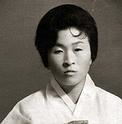
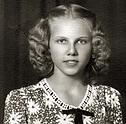
Joel L.A. Peterson’s biological mother from Korea and adopted mother from Midwest America.
Q&A with Author, Joel L.A. Peterson:
- I love the piece from your book where eating oatmeal was compared to torture but you were too polite to refuse it. Did you ever tell your mother that you hated oatmeal?
Unfortunately my mother passed away in 2000, well before my book’s publication. However, I did eventually share the story of her trying to make a special breakfast for my first visit home from college years later. She saw the irony and humor in the whole thing and we had a good laugh together.
- If you could use one word to describe each of your mothers, what would you use?
Duty – for both of them.
- The concept of loss and motherhood in your book is quite profound, from your biological mother making a sacrifice to give you up for international adoption for a better life and your American mom losing a child. As a mom who has suffered a miscarriage, I found some of the writing particularly heartfelt and painful to read. Did either of your moms talk to you in detail about their feelings of loss?
Yes. My birth mother did.
When I reunited with my biological mother as an adult, she shared with me the incredible pain that she suffered after giving me up. It was more painful than she could ever have imagined, she told me. But for something that happened to her, which she believed to be a miracle, she feels she would not have survived.
My adoptive mother was not one to share her inner feelings, especially pain or sorrow. I learned of her loss through my oldest sister, who remembers still the events of the loss and its aftermath.
- As a son who said his most influential persons is his life were his mothers, could you tell me just one thing each of your moms did that truly inspired you to be a better person?
My birth mother’s act of giving me up for a better future always was inspirational to me, but much more so was the fact that, when I found her as an adult, she gave me my life all over again. Many birth mothers, when reunited with a child they have given up for adoption have refused to have a relationship. Or conversely, place demands for a mother/son relationship, with its obligations and guilt. Many adoptees have been emotionally conflicted and torn by either of these responses. My birth mother did neither. She clearly accepted responsibility, stating that I was simply a child and had no say. That she had made the decision and with it went any demands she could place on me. She stressed to me that she was and always will be the mother of the little boy I was, but that the man I had become also had a mother; that my duties as a son were with my adoptive parents, not with her, my birth mother.
My birth mother’s continued offer of love, pride, and a relationship based on mutual terms, while acknowledging and urging me to embrace and focus my love and obligations as a grown son toward the parents who had raised me, freed me of any sense of conflict and inspired me to live up to her example of accepting responsibility for decisions and respecting that others should be free to live their life on their terms.
My adoptive mother was the most selfless, giving, organized, and hardworking person I’ve known. She taught me verbally, but backed it up with her actions that, especially in American society, each one of us has received the benefits. These benefits may have come from the generosity and kindness of friends, family, or strangers. Additionally, we have benefitted from the community and society around us – safe streets, free libraries, honest courts, free schools with dedicated teachers. Her words and actions constantly reinforced the message that if one is willing to receive the benefits of one’s community and society, one must also be equally for more willing to bear its burdens.
My adoptive mother used her nursing training and volunteered for the least glamorous and most difficult charities. She worked with hospice patients, elderly shut-ins, volunteered to drive the ill, the frail, the poor to events and shopping. She delivered hot meals. She collected blood for the Red Cross. She always took the behind-the-scene, roll one’s sleeve up type of tasks and never sought the lime light. She set the example and the standard to which I have attempted to live up to, though with less success and humility.
Mom’s Love in a Breakfast Bowl
by Joel L.A. Peterson
My mother – the wonderful woman who adopted me despite already having four biological children of her own – was a bright, educated, and deeply thoughtful person. So she had been planning for my arrival from the orphanage in many ways. When I arrived from Korea as her new son, I was nearly seven years old, and my mother knew that Koreans did not eat the same breakfast that Americans typically ate.
She reasoned that I was used to eating rice, not cold cereal with milk. But she didn’t want to serve me rice, which she thought could reinforce a sense of not belonging; being treated as a foreigner, given non-typical America food. So she had a plan. She would ease me through the transition from steamed rice.
The very first day, I was seated at the breakfast table surrounded by my new parents, brother, and three sisters. Mother put her plan into action as all the pairs of blue eyes and faces framed by blonde hair looked on.
I didn’t speak any English. I couldn’t understand anything that anyone was saying to me. It was just so much noise. But I was old enough that I had internalized Korean customs and manners. Even though I knew that this was my new family, my Korean socialization urged me to remember that I needed to act like a guest in their house.
In Korea, there are many social rules covering all manner of situations and social settings. Everyone has a specific role. Two of the most important roles were host and guest. Other important roles were adult and child. As a child guest in a strange adult host’s home, Korean custom demanded that I not complain, not refuse any offered food or gift, and that I not leave any food unfinished.
My mother set down a small bowl of steaming hot oatmeal in front of me and placed a small spoon into it and stirred. She sat down and the entire family looked on expectantly. I looked from one set of blue eyes to the next around the table. I looked down at the bowl. There was nothing about the bowl of oatmeal that was remotely like rice. But to my mother’s Midwestern way of thinking, it was similar.
I took a spoonful and put it in my mouth. It was awful. Horrible. The texture, the taste, the stickiness of it were like nothing I had ever eaten. I wanted to spit it out. But I was a guest and the youngest child. I swallowed and almost threw up. I gagged and forced it down my esophagus. I took another spoonful and forced myself to swallow it too. I did this until it was all gone. I’d done my duty as a guest. Everyone around the table was smiling and making their weird English noises at me.
My life in America was off to a distasteful start.
But I had spent most of my life in Korea in near starvation. I lived with my Korean mother until she sent me to Korea Social Services to put me up for adoption when I was six. She had little choice. As a single mother of a mixed race child, she was stigmatized and outcast and could find no other work than in American GI clubs. At times, we were reduced to begging on the streets. She knew she could not support me and that I had little hope for a future in Korean society.
So I had learned never to refuse food. No matter what.
The next day, the same thing happened. And the next. And the next. But the servings of oatmeal grew larger over time, eventually needing a bigger bowl. I somehow managed to choke down every bowl, leaving each clean of any leftovers. I thought this was some sort of American torture ritual that the youngest in a family must endure.
In Korea, there were customs that didn’t allow children certain adult foods or to use adult terms for things until they had reached a certain age. I thought maybe it was similar in America. While everyone else in the family got to eat delicious looking cereal with milk, I thought I must be too young, and was relegated to this God awful, goopy oatmeal stuff. I endured this torture for six months. One day, my mother asked me if I wanted to try some cereal, pointing to a box of raisin bran on the table. By now, I could speak English and I understood her offer fully. I leaped at the chance and grabbed the Raisin Bran box and poured myself a bowl full of it. Dad poured the milk, since I was too small to safely hold the heavy, large pitcher.
The first spoonful of raisin bran was pure heaven! The taste was nutty but sweet, the texture crunchy and the milk cool and quenching. I loved it! I must have eaten Raisin Bran for the next two years. To this day, it’s my favorite cereal.
Years later, I came home for the first time from college. It was Christmas time and I came down for my first home cooked breakfast since going out of state for school. And there at my table place was a big steaming bowl of oatmeal.
“I thought I would make you a treat,” Mom said. “You used to just love oatmeal when you first came from Korea! You would always clean your bowl and we kept having to give you bigger and bigger servings, because you would always eat it up.” She smiled and gave one of her musical laughs. “I finally had to force you to try something different! But it’s good to have you home for the Holidays. So I made this special, just for you.” She beamed.
My mother is a wonderful woman – bright and well educated. And deeply thoughtful and giving.
I didn’t have the heart to tell her the truth. I sat down and ate, cleaning the bowl while my mother smiled.
In his new book, Dreams of My Mothers, author Joel L.A. Peterson brings his unique personal background as a biracial international adoptee and combines it with his penetrating insights into multiple cultures to create an exceptionally enthralling and inspirational story. Learn more at www.dreamsofmymothers.com.
Mom’s Love in a Breakfast Bowl from Dreams of My Mothers (Hardcover) Mother’s Day Feature
List Price: $ 29.95 (Hardcover and Signed by Author)
 Momma's Bacon