
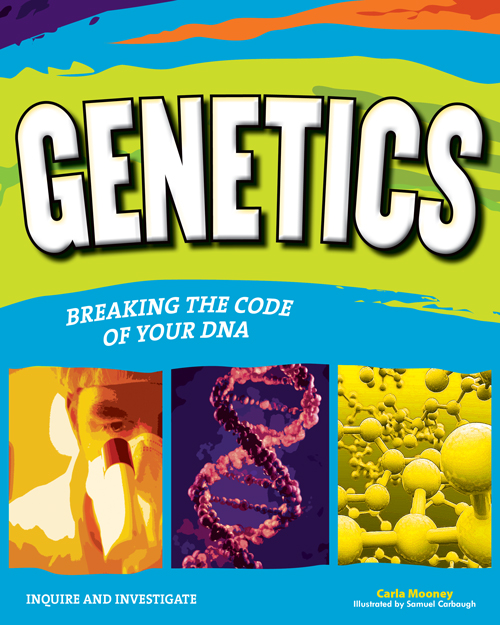
Genetics: Breaking the Code of Your DNA (Hardcover, Age 12+)
Breaking the Code of Your DNA!
I have been a big fan of Nomad Press’s inquire and investigate series and was excited to see what was on the publishing list for 2014. First up is a really fascinating book about Genetics. We all know the term DNA, but do we really understand the very important main concepts of genetics such as how our genetic inheritance works?
Holy cow! I so needed to read this for my own refresh on lots of genetic discoveries like a chromosome, how DNA is structured and how studying genetics can cure and prevent disease! This book also talks about the controversies of genetics such as stem cell research or using genetically modified foods. When you start to really think about how genetics has helped us understand living organisms it is rather mind blowing. We may not all be scientists but to learn about these broad topics in fun and gentle terms is so important for a child’s understanding. And, hey, if your child is going to be the next Oswald Avery, why not start them young?
Fun with DNA! My mother-in-law recently did a DNA test through Ancestry.com for genealogy purposes that was so interesting! She was even able to match up to my husband’s great-great-great grandfather (born in the UK) and got a picture. How amazing is that? Brooke enjoyed seeing the picture and having me talk to her about her great-great-great-great (whew!) grandfather.
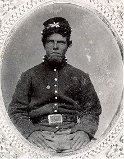
Bob’s great-great-great grandfather. His name was John and he volunteered to serve in the Union Army in Ohio during the American Civil War at the ‘young’ age of 42. He served two years in the military before getting out on a medical discharge. Wow!
Great Learning Tips for Parents (from the last Nomad Press newsletter):
Ideas and Tips for Successful Integration (with examples from our books, Bridges and Tunnels and Skyscrapers)!
- Start small and simple. Ask students to come up with a solution to an easy problem, like rearranging the desks in the classroom to meet a certain need: more group participation, for example. This can be done in any classroom. Language Arts, Math, Science…and then build on the complexity. Move the problem outside. How can students fix the traffic congestion during pick-up and drop-off time. Would a bridge or a tunnel work?
- Embrace Failure. When students come up with a solution that simply doesn’t work, encourage them to re-identify the problem and then re-work a solution based on what they’ve already come up with.
- Solve real-life problems. Keep the problems to be solved current and relevant to the lives of your students, at least at first. For example, if your students live in rural areas, ask them to tackle rural problems. If your students are urban, keep the problems urban. This provides students with the feeling that what they’re doing could actually benefit the greater community in which they live.
*BOTTOM LINE: Integrating engineering into curriculum literally helps kids build “bridges” into the real world!!*
About Nomad Press: Nomad Press is a Vermont publisher that is focused on educational interests for young children. Nomad is interested in engaging children through interactive projects and exploring history and science behind many intriguing topics. Check out the great Nomad Blog for some fun projects to do with your kids!
Genetics: Breaking the Code of Your DNA (Hardcover, Age 12+)
List Price: $16.95
 Momma's Bacon